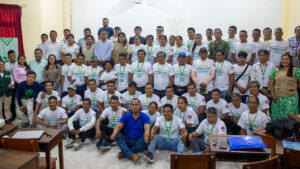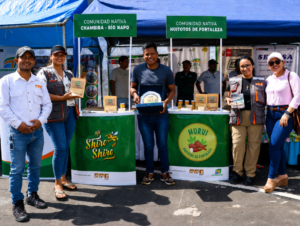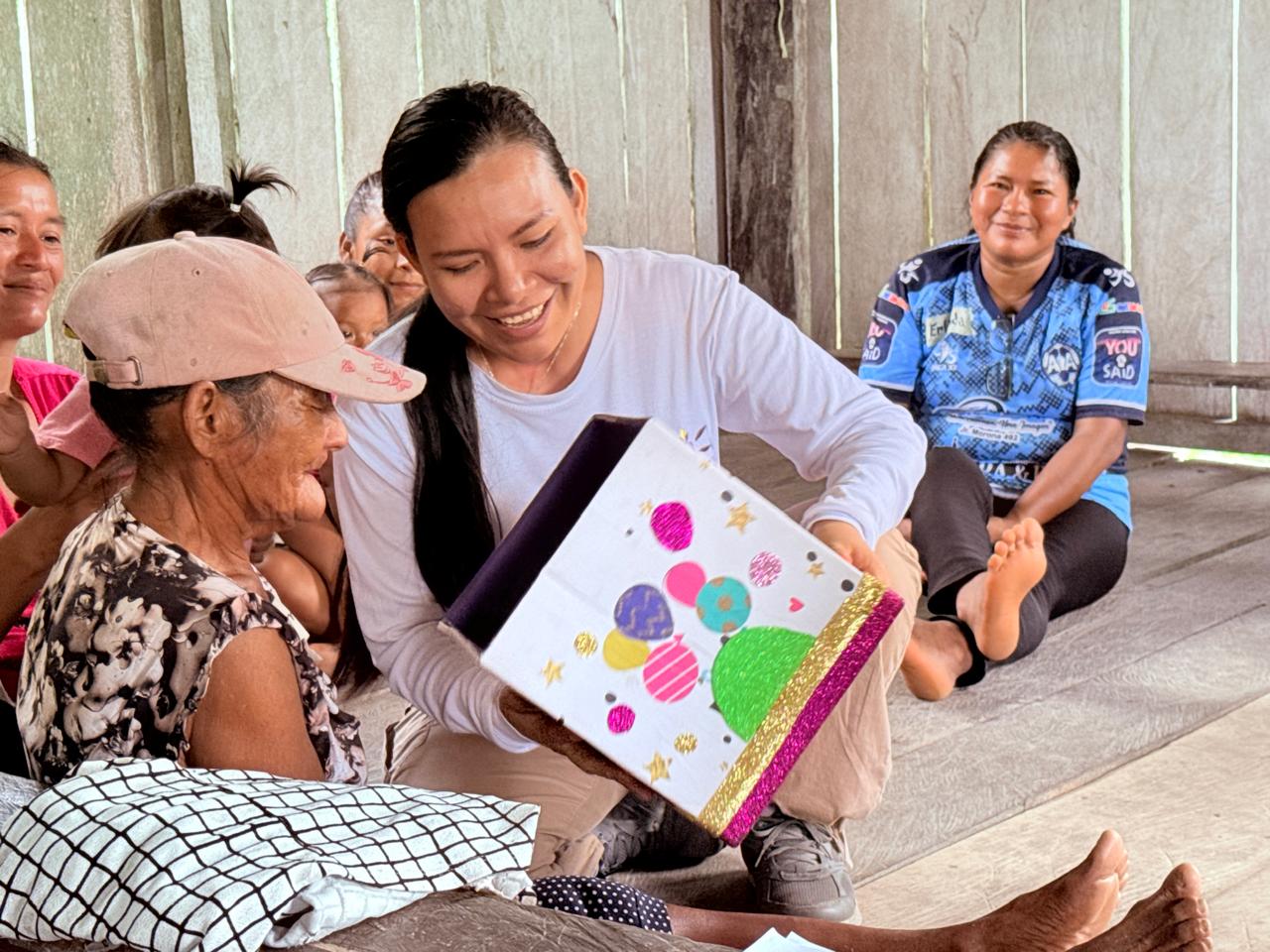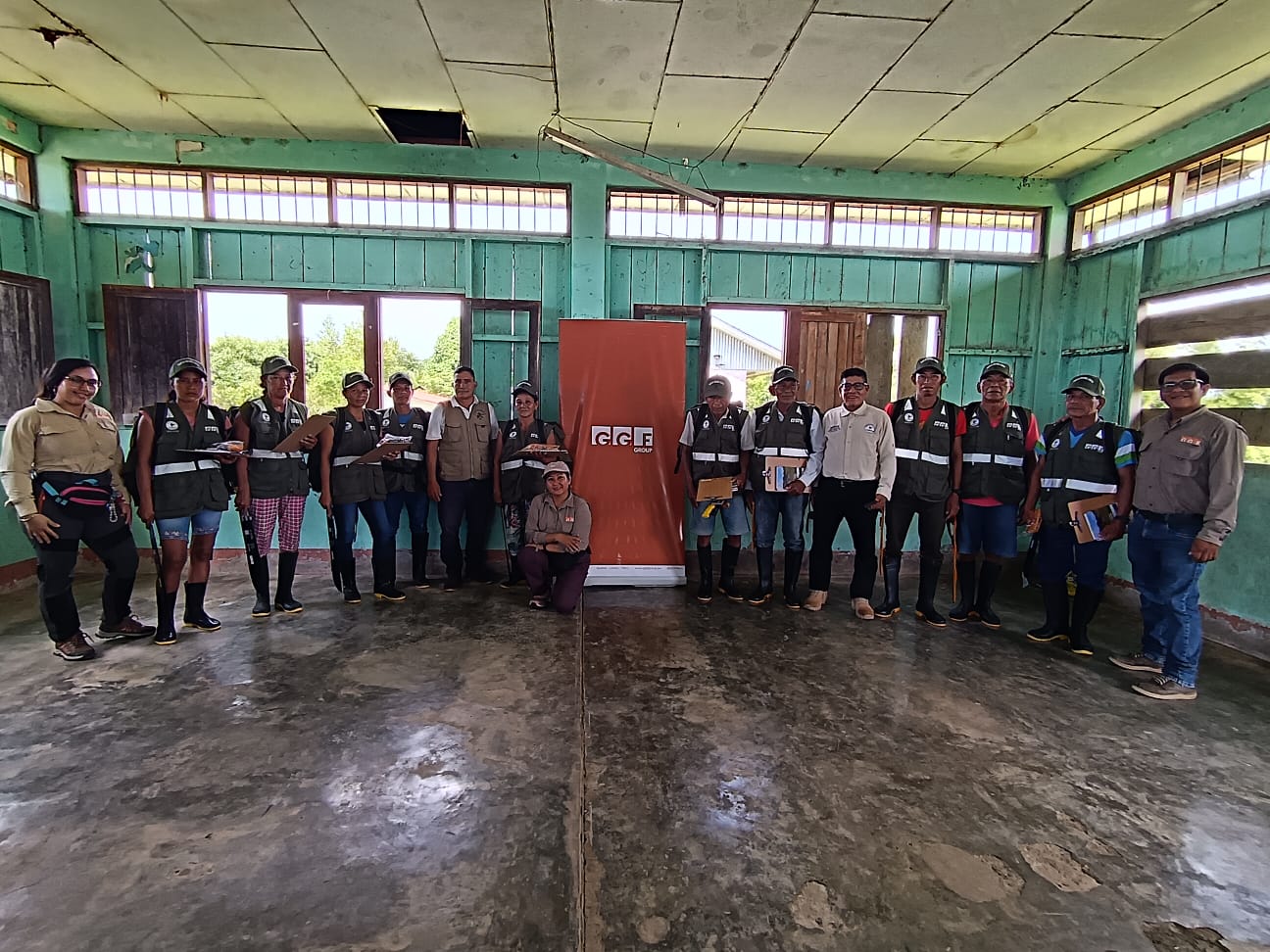

As part of its commitment to sustainable forest management and the strengthening of Community Forest Management, Green Gold Forestry (GGF), together with the specialized unit of the Regional Office for Forest and Wildlife Development (GERFOR), implemented and delivered equipment and supplies to the Community Forest Surveillance and Control Committees (CVCFC) of the native communities of Huiririma, Sargento Lores, Chambira, and Santa María de Loreto. These communities are located in the Napo River basin and belong to the Quechua language family and the Kichwa ethnic group.
The activity took place from November 17 to 19, in coordination with GERFOR and the Federation of Native Communities of the Middle Napo (FECONANM). Its purpose was to improve the logistical and operational conditions of the committees during their patrols and monitoring activities, ensuring safer and more efficient work in the field.
This delivery of materials is part of a broader community strengthening process promoted by GGF and GERFOR. Previously, from July 21 to 24, training workshops were held with the committees of Sargento Lores, Santa María de Loreto, and Chambira, aimed at strengthening surveillance, control, and conservation actions for the nation’s forest and wildlife heritage within communal territory.
During these training sessions, participants received technical instruction on surveillance, monitoring, incident reporting, proper use of tools, forest regulations, and coordination mechanisms with the regional authority. The sessions were conducted with a participatory and intercultural approach, integrating local knowledge and community practices. More than 20 members from the three communities actively took part, helping to consolidate their role as key actors in managing and protecting communal forest heritage.
Thus, the implementation carried out in November represents the second phase of the process. It included the delivery of essential equipment for patrol and forest heritage control activities, such as vests, rubber boots, canvas backpacks, hardcover notebooks, patrol logbooks, measuring tapes, machetes, tents, and informational banners. In the case of the Huiririma community, a wooden boat and a 13 HP “peque-peque” motor were also provided to support river-based surveillance.
“Strengthening community committees is key to ensuring forest protection from within the territories. This joint effort reaffirms the commitment of the communities and our company to conservation,” stated Eng. Edwin Upiachihua, forest specialist at GERFOR, during the handover.
The activities included institutional presentations, technical guidance on the proper use of the equipment, and the signing of corresponding records, ensuring a transparent and participatory process. A total of 27 community representatives and local authorities participated in the implementation sessions.
The Community Forest Surveillance and Control Committees play a fundamental role in protecting the Amazon’s natural heritage. Within their territories, these groups carry out monitoring, patrolling, reporting of illegal activities, prevention, and environmental education, becoming the first line of defense against threats such as illegal logging, unauthorized hunting, or improper use of resources.
Their presence strengthens local governance and promotes an active community role in conservation, ensuring that forest use remains sustainable and that the ecosystems sustaining Indigenous life and culture remain in balance. They also contribute directly to regional and national efforts to mitigate climate change and preserve biodiversity.