
At Green Gold Forestry Peru, forest conservation is a comprehensive commitment that includes the study and protection of wildlife species inhabiting our concessions. These animals play essential roles in maintaining ecosystem balance, contributing to the forest’s natural regeneration, biological control, and the overall health of the Amazonian ecosystem.
Within the Peruvian Amazon, numerous species perform key ecological roles. Mammals such as deer, peccaries, and pacas act as seed dispersers, supporting vegetation regeneration. Felines like the iconic and imposing jaguar, along with birds of prey, serve as regulating predators, helping to maintain balanced populations of other species. Meanwhile, smaller animals—such as rodents, insectivorous birds, and various amphibians—contribute to natural pest control and nutrient recycling.
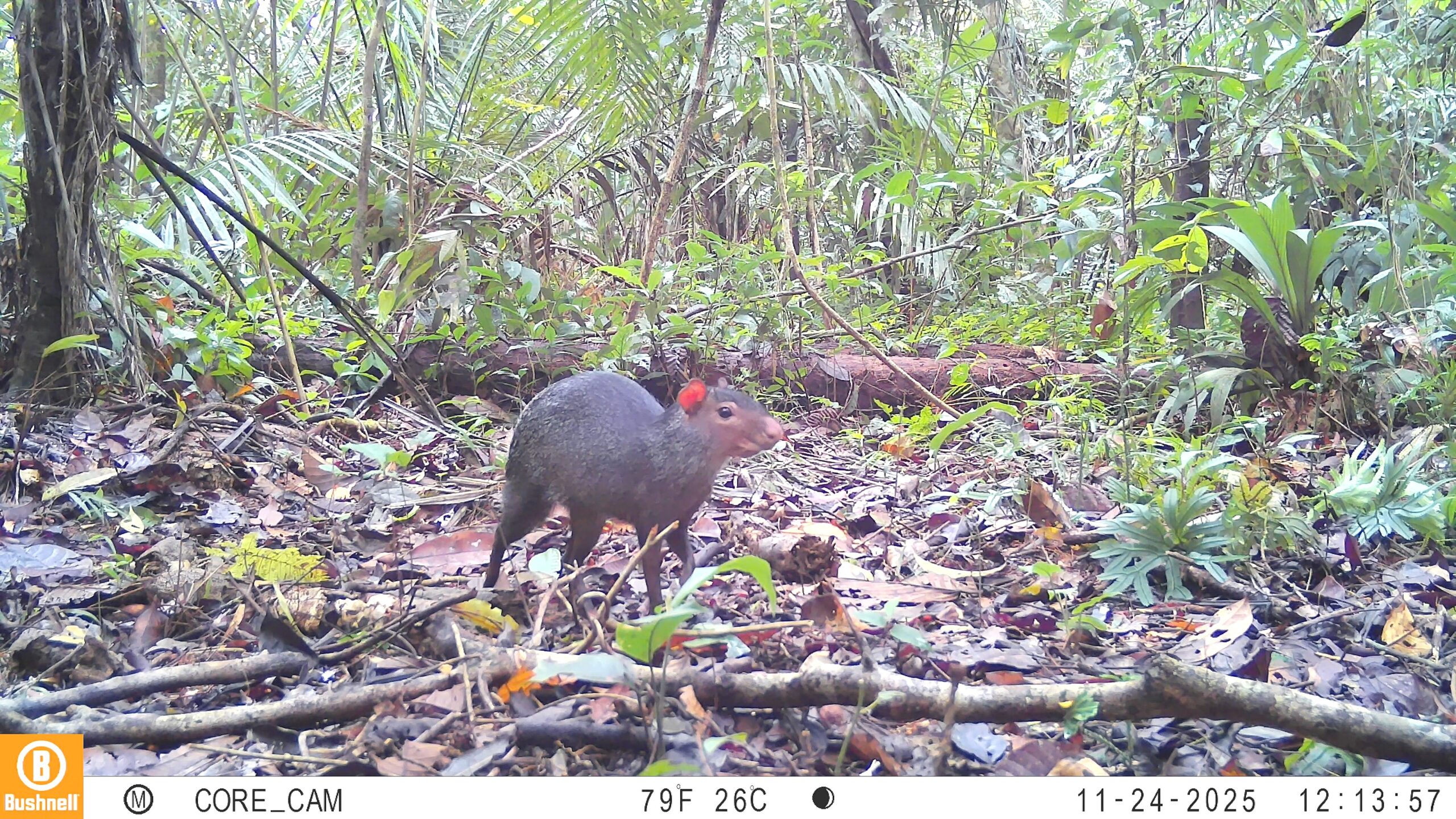
Through wildlife monitoring using camera traps, we have been able to record the natural activity of seed dispersers, which play a fundamental role in forest regeneration and diversity. These species transport seeds across the territory, allowing new plants to germinate far from parent trees. For example, Dasyprocta fuliginosa, an Amazonian rodent, is much more than a fruit consumer. While feeding on seeds and pulp, it also transports and plants them in different locations.
This process not only supports the expansion of plant species but also maintains the structure and resilience of the ecosystem. Thanks to these animals, forests renew themselves naturally, increase biodiversity, and strengthen their ability to adapt to environmental changes—an essential factor for the health and continuity of Amazonian ecosystems.
The use of camera traps has become a fundamental tool in our conservation work. These technologies allow us to record elusive or nocturnal wildlife without interfering with their natural behavior, ensuring continuous and non-invasive monitoring. In addition, the data collected helps identify biological corridors, analyze activity patterns, and detect potential threats at an early stage.
The records obtained not only demonstrate the biological richness present in our concessions but also confirm that the forests are in a healthy and functional state. Each new species recorded is an indicator of the positive impact of our conservation actions and the effectiveness of our sustainable management protocols.
At GGF, we continue to strengthen these efforts, understanding that protecting wildlife means protecting the forest. Their presence ensures the continuity of the ecological processes that keep our ecosystems alive and sustain the environmental services upon which communities and future generations depend.